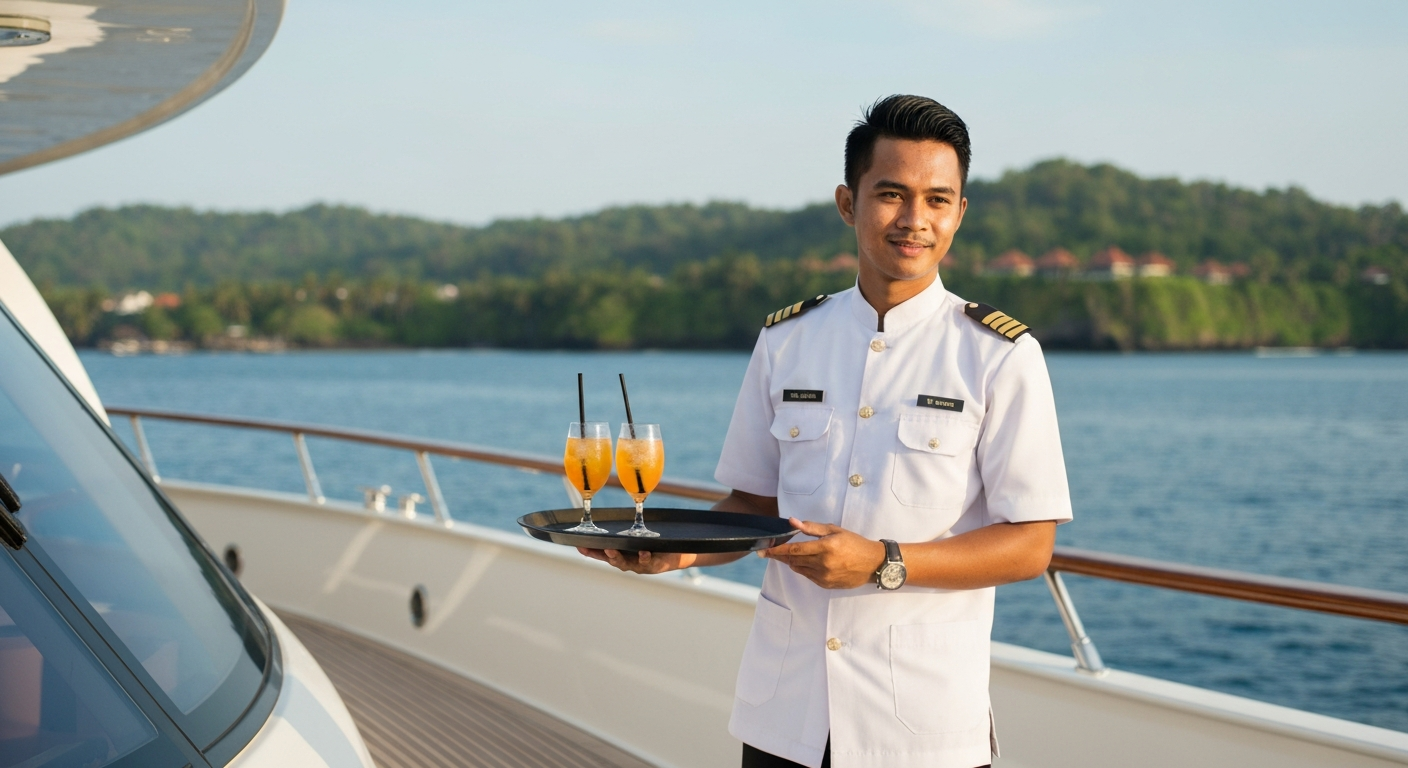
Ensuring guest safety and operational integrity forms the cornerstone of any premium Bali yacht VIP charter experience. Reputable operators prioritize stringent crew certifications and adhere to comprehensive safety protocols. This commitment safeguards passengers and crew, establishing a framework for secure maritime activities across Bali’s waters. The Indonesian government, through agencies like the Ministry of Transportation (Kemenhub), enforces strict regulations for all commercial vessels operating in its archipelago, which comprises over 17,500 islands. In 2026, these standards continue to evolve, reflecting international best practices for maritime safety and environmental protection, ensuring a safe and reliable experience for all guests.
Indonesian Maritime Safety Regulations and Oversight
Indonesia’s maritime sector operates under specific national and international safety regulations. The Ministry of Transportation (Kemenhub) oversees all commercial shipping and passenger vessels, including luxury yachts. This regulatory body implements laws and decrees to ensure seaworthiness and operational compliance. For instance, the Directorate General of Sea Transportation (Ditjen Hubla) issues annual Certificates of Seaworthiness for all vessels over a certain tonnage, typically conducted by local Port Authority (Kantor Kesyahbandaran dan Otoritas Pelabuhan or KSOP) offices. In 2025, over 3,000 commercial vessels were inspected across Indonesian ports, reflecting consistent enforcement efforts. These inspections cover hull integrity, engine performance, navigation equipment, and emergency systems, ensuring vessels meet current safety benchmarks.
Compliance with these regulations is mandatory for all charter operators in Bali. Vessels undergo regular checks, sometimes unannounced, to verify adherence to safety standards. Penalties for non-compliance can include fines up to IDR 500 million (approximately USD 32,000) and suspension of operating licenses. The focus remains on proactive prevention rather than reactive measures, aligning with global maritime safety initiatives. This robust regulatory environment provides a foundational layer of safety for guests seeking a luxury yacht day charter experience in the region.
Crew Training and International Certifications
The competency of yacht crew directly impacts passenger safety and the quality of service. All professional crew members on commercial yachts in Bali must possess valid certifications issued under the International Convention on Standards of Training, Certification and Watchkeeping for Seafarers (STCW). The STCW Convention, specifically the 2010 Manila Amendments, sets global benchmarks for training, medical fitness, and professional conduct. Each crew member, from the captain to deckhands, completes mandatory courses covering basic safety, fire prevention and firefighting, elementary first aid, and personal survival techniques. These essential certifications are renewed every five years, ensuring up-to-date knowledge and skills.
Captains commanding a Bali yacht VIP charter typically hold a Class III or Class IV Master’s license, depending on vessel size and operating area. This involves extensive sea time, advanced navigation training, and comprehensive examinations. First mates and engineers also possess specific certifications relevant to their roles, such as Engine Officer Class III or IV. Many crew members also complete additional training in advanced first aid, passenger safety, and crisis management, often totaling over 100 hours of specialized instruction. This continuous professional development ensures a highly skilled and responsive team onboard, ready to manage any situation effectively and provide excellent service to guests.
Vessel Maintenance and Technical Safety Protocols
Rigorous vessel maintenance forms a critical component of operational safety for any yacht charter service. Each vessel undergoes a strict maintenance schedule, adhering to manufacturer guidelines and regulatory requirements. This includes daily pre-departure checks, weekly system inspections, and comprehensive monthly overhauls. Major dry-docking and extensive servicing occur annually, where hulls are inspected, engines are serviced, and all critical systems are tested. For a typical luxury catamaran operating in Bali, annual dry-docking costs can exceed USD 15,000, reflecting the investment in safety and reliability.
All safety equipment, including life rafts, life jackets, fire extinguishers, and emergency communication devices, receives regular inspections and servicing. Life rafts are professionally serviced every 12 months, and fire extinguishers are pressure-tested and refilled annually. Navigation systems, including GPS, radar, and electronic charting, are calibrated quarterly to ensure accuracy. These protocols minimize the risk of mechanical failure and ensure all safety apparatus functions correctly when needed. Operators often maintain a spare parts inventory valued at approximately USD 5,000 to address minor technical issues rapidly, preventing delays and ensuring continuous operational readiness for private yacht trips to Nusa Penida.
Emergency Preparedness and Crew Drills
Effective emergency preparedness is fundamental to yacht safety. All crew members participate in regular safety drills, simulating various emergency scenarios. These drills include fire response, man overboard procedures, medical emergencies, and abandon ship exercises. Drills are conducted at least monthly, reinforcing crew coordination and individual responsibilities. Each vessel maintains a comprehensive Emergency Response Plan, detailing specific actions for every foreseeable incident, from minor electrical faults to severe weather conditions. This plan is reviewed quarterly and updated as necessary, incorporating lessons learned from drills and any changes in regulations.
Communication protocols are also strictly defined. Vessels are equipped with multiple independent communication systems, including VHF marine radios, satellite phones, and mobile phones, ensuring contact with shore support and emergency services. The primary VHF radio typically has a range of 20-30 nautical miles, covering most operational areas around Bali. In the event of a serious incident, the Indonesian Search and Rescue Agency (BASARNAS) is alerted immediately, with their Bali operational center located in Denpasar. BASARNAS coordinates maritime rescue efforts across the region, providing a vital safety net for all vessels. This multi-layered approach to emergency preparedness ensures rapid, coordinated responses to protect guests and crew.
Guest Safety Briefings and Onboard Procedures
Upon boarding a Bali yacht VIP charter, all guests receive a mandatory safety briefing. This briefing covers essential information, including the location of life jackets, emergency exits, and the use of onboard safety equipment. Crew members demonstrate how to properly wear a life jacket and explain the muster points in case of an emergency. Guests are also informed about general onboard rules, such as designated smoking areas (if any), waste disposal policies, and restrictions on movement during specific maneuvers. These briefings are typically conducted within the first 15 minutes of boarding and are designed to be clear and concise.
Throughout the charter, crew members maintain a vigilant watch, both visually and via radar, for potential hazards such as other vessel traffic or changes in weather conditions. Guests are advised to follow crew instructions at all times, especially when moving around the vessel or participating in water activities like snorkeling. For families with children, specific safety guidelines are provided, including recommendations for child-sized life jackets and supervision. Adherence to these simple procedures helps maintain a safe environment for everyone onboard, allowing guests to relax and enjoy their family yacht charter experience without concern.
Environmental Stewardship and Sustainable Operations
Safety protocols extend beyond human well-being to encompass environmental protection, especially crucial in Bali’s pristine marine ecosystems. Operators adhere strictly to Indonesian environmental regulations and international conventions like MARPOL (International Convention for the Prevention of Pollution from Ships) Annex V, which governs the disposal of garbage at sea. All waste generated onboard is segregated and stored for proper disposal ashore, preventing marine pollution. Blackwater (sewage) and greywater (from sinks and showers) are managed through onboard treatment systems or held in tanks for discharge in designated areas far from sensitive reefs and swimming zones.
Fueling procedures are meticulously executed to prevent spills, with crew trained in spill containment and cleanup. The use of environmentally friendly cleaning products is prioritized where possible. Anchoring practices are also regulated; vessels anchor only in sandy areas, avoiding coral reefs to protect marine habitats. These practices, while not directly related to immediate passenger safety, contribute to the long-term sustainability of Bali’s marine environment, ensuring future generations can also experience its beauty. Transparent pricing for these operations can be found on our Bali Yacht VIP Pricing 2026 page.
Key Safety Measures on Bali Yacht VIP Charters:
- **Certified Crew:** All captains and crew hold valid STCW certifications, renewed every five years.
- **Regular Vessel Inspections:** Annual Certificates of Seaworthiness from KSOP, with quarterly system checks.
- **Comprehensive Safety Equipment:** Each vessel carries life rafts (capacity exceeding 150% of guests), life jackets for all ages, EPIRB, SART, and multiple fire extinguishers.
- **Advanced Navigation Systems:** Redundant GPS, radar, depth sounders, and electronic charts are standard.
- **Multiple Communication Channels:** VHF marine radios, satellite phones, and mobile phones for constant contact.
- **Mandatory Guest Safety Briefings:** Conducted prior to departure, covering emergency procedures and equipment location.
- **Strict Emergency Drills:** Crew perform monthly drills for fire, man overboard, and medical response scenarios.
- **Onboard Medical Facilities:** Well-stocked first aid kits and designated crew members with advanced medical training.
- **Environmental Compliance:** Adherence to MARPOL regulations for waste and sewage management, preventing marine pollution.
- **Weather Monitoring:** Continuous monitoring of weather forecasts and real-time conditions to adjust itineraries for safety.
- **24/7 Shore Support:** Dedicated land-based team provides continuous operational and emergency support.
The dedication to stringent crew certifications and comprehensive safety protocols underpins every Bali Yacht VIP Charter experience. This operational philosophy ensures that guests receive not only exceptional service but also the highest standards of safety throughout their time on Bali’s waters. Our commitment reflects both international maritime best practices and local Indonesian regulatory requirements, guaranteeing peace of mind for all travelers. For further details on specific charter options and safety features, please contact us directly.